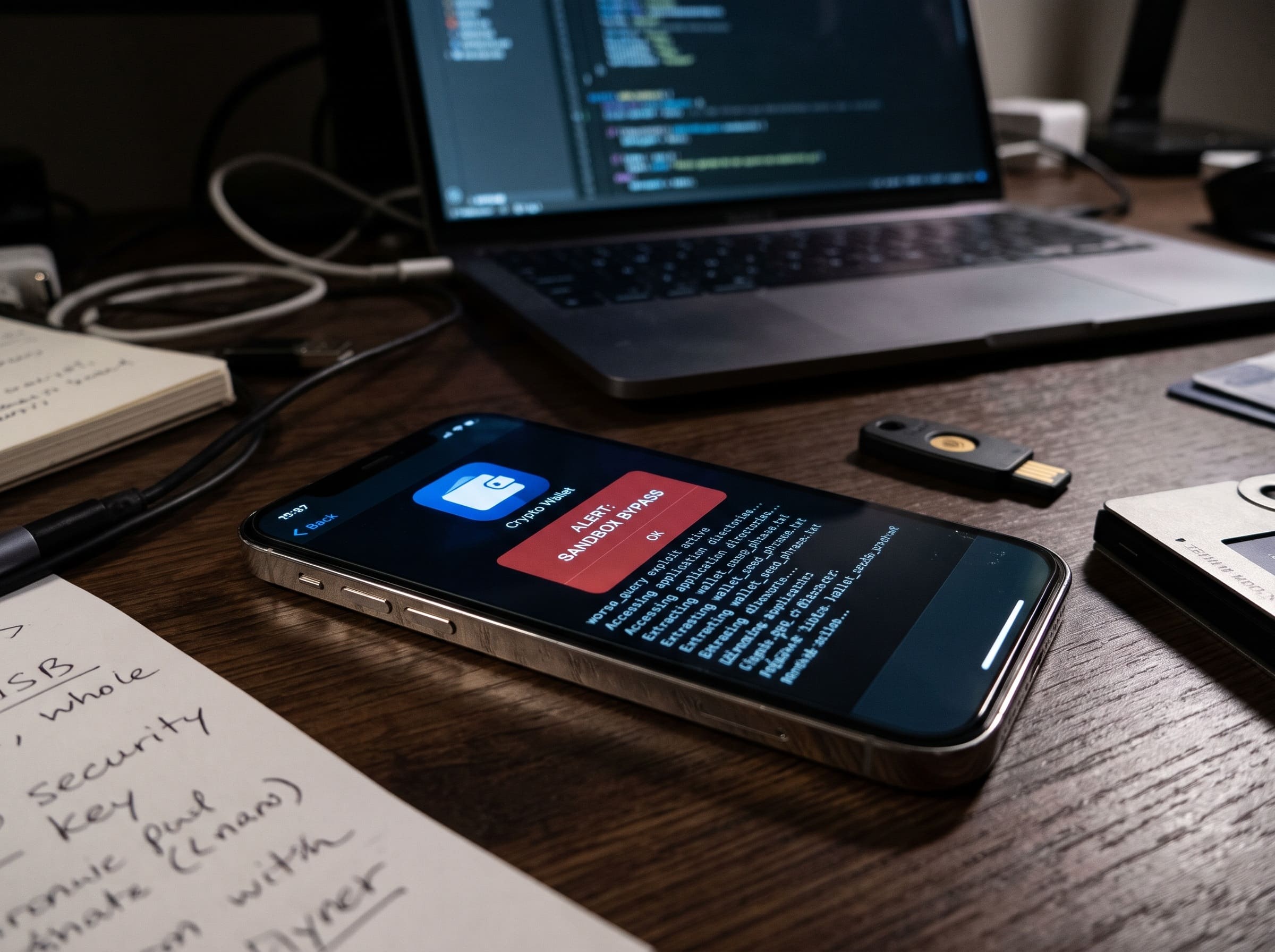
A severe security vulnerability in Apple's mobile operating system—dubbed "worse_query"—has sent shockwaves through the cybersecurity and cryptocurrency communities. The exploit breaks the fundamental security perimeter of iOS, allowing malicious applications to bypass sandbox restrictions and read local data containers belonging to other installed applications. This architectural breach poses an immediate and direct threat to self-custody cryptocurrency wallets, where private keys, seed phrases, and sensitive authentication credentials could be harvested without the user's knowledge.
Understanding the iOS Sandbox Model and the Breach
For more than a decade, the core tenet of Apple's iOS security architecture has been application sandboxing. Under normal operating conditions, every application is assigned an isolated container on the file system. An app is strictly restricted from reading or writing files within another app's container unless explicitly mediated by secure system frameworks (such as the system Share Sheet or managed App Groups under the same developer certificate).
The worse_query vulnerability undermines this trust boundary. Discovered and published as a local sandbox escape proof-of-concept, the flaw allows an installed application to traverse directory trees and access arbitrary local containers across the device without requiring a traditional jailbreak. Developers demonstrated that arbitrary file inspection tools (such as the proof-of-concept tool WQ Files) could inspect, export, and read files stored in third-party app directories.
Why Cryptocurrency Wallets Are at Extreme Risk
While the cross-app data leakage impacts user privacy broadly, self-custody cryptocurrency ecosystems face catastrophic financial consequences. Unlike centralized platforms where session revocation or multi-factor authentication can halt an attack, self-custody blockchains rely on immutable cryptographic secrets:
- Seed Phrase and Mnemonic Exposure: While reputable wallets encrypt seed phrases using the iOS Keychain or Secure Enclave, some decentralized applications (dApps), non-custodial wallets, and browser extensions cache temporary session keys, recovery phrase fragments, or unencrypted transaction logs within their local sandbox documents directory.
- Collateral Storage Leaks: Mobile users frequently store 12- or 24-word recovery phrases in note-taking apps, local document viewers, or as screenshots in the device photo library. A rogue application exploiting cross-app container access can scan these storage caches to extract mnemonic strings using automated regex parsing.
- Session Hijacking and API Token Theft: Centralized exchange apps and Web3 identity aggregators frequently store active authentication tokens, authorization cookies, and cached biometrics metadata locally. Stolen tokens allow attackers to mimic legitimate user sessions and initiate unauthorized actions.
Affected Software Versions and Advisory Notices
Major cryptocurrency security desks and exchanges, including Binance and KuCoin, issued emergency security advisories warning users of the vulnerability. The security flaw specifically targets several recent versions of Apple's platform:
- Confirmed Affected Versions: iOS 26.7.1, iOS 27.0.1, and iOS 27.2.
- Mitigation Firmware: Recent security updates (such as iOS 27.2.1 and iOS 26.7.3) address critical system components, and blockchain security firms report that newer patches help neutralize the specific exploit vector.
- Attack Vectors: The primary attack vector involves third-party applications installed outside standard App Store review channels—specifically sideloaded packages, enterprise certificates, and developer-signed IPAs distributed through alternate marketplaces or phishing links.
Immediate Actionable Recommendations
Security researchers and crypto security analysts strongly urge all iPhone and iPad users who manage digital assets to execute the following mitigation protocol immediately:
- Purge Sideloaded Applications: Immediately delete any apps installed through unofficial package installers, test distribution systems, or manual certificate signing. Only retain verified applications downloaded directly from the official Apple App Store.
- Update iOS Immediately: Navigate to Settings > General > Software Update and verify that the operating system is updated to the latest available release to patch the sandbox escape vector.
- Migrate Potentially Exposed Funds: If an affected device hosted a hot wallet while untrusted third-party apps were present, treat that wallet as compromised. Generate a brand new seed phrase on a dedicated hardware wallet or an isolated clean device, and transfer all assets over immediately.
- Audit Digital Notes and Photos: Delete all images, screenshots, and plain text notes that contain seed phrases or private keys. Cryptographic backup phrases must never be stored in digital formats on internet-connected devices.
The worse_query incident reinforces an essential cybersecurity maxim: operating system boundaries provide strong defense-in-depth, but software-level sandboxing should never be the sole line of defense protecting sovereign financial assets.